

Mechanical anchors and studs are the default choice for permanent external signage, offering the load capacity and weather resistance that fascias and masonry demand. For premium dimensional lettering, locators and standoffs deliver a cleaner finish; for smooth, sheltered panels, VHB and structural adhesives can work well, provided the substrate is right. Cable ties and banding suit mesh fencing and temporary events, while magnets belong strictly to short-term steel applications.
- Permanent external signs: mechanical anchors or through-bolts into masonry or steel
- Premium letters and logos: locators or standoffs with concealed fixings
- Smooth, sheltered panels: VHB tape, often backed up mechanically
- Temporary fencing or events: UV-rated cable ties or clip fittings
- Short-term steel-only fixes: magnets, never for wind-exposed or long-term use
Pro Tip: Combine adhesive and mechanical fixings on any critical external panel where a visible screw head is unwelcome. It’s the belt-and-braces approach most experienced installers default to, and SafetySignHub’s installation guidance backs it for good reason. Anything projecting or carrying real wind load should go through documented pull testing before it goes anywhere near a wall.
Key Takeaways
The right sign fixing method depends on load, substrate and permanence, and mechanical anchors remain the safest default for permanent external signage.
| Point | Details |
|---|---|
| Match method to substrate | Masonry, steel and cladding each demand different anchor types and embedment depths. |
| Use stainless outdoors | SS304 or SS316 fasteners resist corrosion far better than zinc-plated alternatives. |
| Pull test high-load signs | Projecting or heavy signs need documented pull testing, not just a visual check. |
| Inspect on a schedule | Annual checks, biannual in coastal or high-wind sites, catch failures before they escalate. |
| A3m manages the whole job | A3m specifies, manufactures and installs signage with fixing methods engineered in from the survey stage. |
Table of Contents
- Sign fixing methods at a glance: which family fits your job?
- Mechanical fastenings: screws, anchors, studs and plugs
- Locators and standoffs for dimensional lettering
- Rails, trays and bracket systems for heavy signs
- When do adhesive fixings and VHB tape actually work?
- Temporary and specialist fixings: cable ties, banding and magnets
- How do you choose the right fixing method for your project?
- What UK standards and competence checks should you insist on?
- Maintenance and inspection schedule for fixed signage
- What installers get wrong most often
- Get your signage specified and installed properly
- Sources
Sign fixing methods at a glance: which family fits your job?
Every fixing decision comes down to five questions: how much does the sign weigh, is it permanent or temporary, does it need to look invisible, what’s the substrate, and how exposed is the site to wind and salt air? Answer those first, and the right method usually becomes obvious.
- Mechanical fixings (screws, anchors, studs): permanent, high-load, most substrates
- Locators and standoffs: premium visual finish, moderate load, needs flat substrate
- Rails and trays: heavy or serviceable signs, distributes load across structure
- Adhesives and VHB tape: light panels, smooth non-porous surfaces only
- Cable ties, clips, magnets: temporary or low-risk applications
Coastal sites push everything towards stainless steel. Listed buildings and cladding warranties often rule out drilling altogether, and high wind exposure turns a “nice to have” pull test into a requirement.
Mechanical fastenings: screws, anchors, studs and plugs
For solid masonry, rawl plugs handle light to moderate loads; chemical anchors suit denser concrete or where vibration resistance matters; through-bolts are the answer for steel structures or where you need certifiable load ratings. Embedment depth has to match the manufacturer’s data for that specific substrate, not a rule of thumb.
- Match anchor type to substrate density and sign weight, not just hole size
- Specify SS304 or SS316 stainless for anything outdoors, never zinc-plated
- Use fixing templates for consistent spacing across multi-point installations
- Torque to the fastener manufacturer’s spec, and pull test projecting or high-load signs
Pro Tip: Zinc-plated screws look fine on day one and rust-streak your fascia within a year. It’s one of the most common causes of callback work in the trade, and switching to stainless fasteners costs almost nothing extra at spec stage.
Locators and standoffs for dimensional lettering
Snap locators and brass or nickel locator systems let dimensional letters sit flush against a fascia without visible screw heads, which is why premium retail and hospitality signage leans on them so heavily. Standoffs pull letters or panels forward from the wall instead, creating a shadow gap that reads well from a distance.
- Choose standoff length based on desired shadow depth and thermal movement allowance
- Use concealed fixings behind the letter face where the brief calls for a seamless look
- Fit second-generation acrylic locking nuts rather than standard nuts for outdoor letters
- Check vibration resistance where signs sit near traffic, extraction units or high footfall
Thermal expansion matters more than most specifiers expect. Aluminium letters move noticeably across a UK seasonal temperature range, so standoffs need enough tolerance to avoid stress cracking at the fixing point.
Rails, trays and bracket systems for heavy signs
Rails and trays exist to spread load across a wall’s structural backing rather than concentrating it on a handful of screw points, which is exactly why they’re the right call for heavy fascia signs, illuminated boxes or anything that needs periodic servicing.
- Fix rails into structural steel or masonry, never into cladding or render alone
- Space bracket points evenly and check level before final fixing, not after
- Route cables and drainage carefully on illuminated trays to prevent water ingress
- Favour trays or upstands on listed buildings, where drilling into original fabric is restricted
A tray system also speeds up future maintenance considerably, as explained in this digital signage design guide. Swapping out an illuminated panel takes minutes when it lifts off a rail, compared with a full re-drill if it was fixed directly. Our architectural signage guide covers how this plays out on real fascia projects.
When do adhesive fixings and VHB tape actually work?
VHB tape and structural adhesives work well on smooth, clean, non-porous surfaces carrying light loads, sheltered from direct wind pressure. On brick, render or anything textured, adhesion drops off fast, which is why SafetySignHub’s guidance is blunt about matching the method to the surface, not the sign.
- Prime the substrate where the manufacturer specifies it, and respect application temperature windows
- Stick to the tape’s rated weight limit, and back it up mechanically for anything critical
- Expect bond strength to degrade slowly with UV exposure, moisture cycling and thermal movement
Pro Tip: Never rely on adhesive alone above head height outdoors. A mechanical fixing hidden behind the panel edge gives you the clean look and the safety margin.
Temporary and specialist fixings: cable ties, banding and magnets
Temporary doesn’t mean careless. Cable ties on mesh or fencing need to be UV-rated, used in multiples per sign, and checked regularly, since a single tie fatigues faster than most people expect.
- Fit at least four UV-stabilised cable ties per sign panel on mesh or fencing
- Use clip fittings or screw banding for post-mounted road and directional signs
- Reserve magnets strictly for temporary fixes to flat steel, indoors or sheltered
- Inspect temporary fixings weekly in exposed locations, more often after storms
- Never treat a temporary method as a long-term or high-wind solution
Post-mounted signage has its own conventions worth following, and Road-signs sets out the clip and banding approach used across most UK post installations.
How do you choose the right fixing method for your project?
Work through this in order, and you’ll rarely end up specifying the wrong method.
- Measure load and wind exposure — weight, sail area, and site wind zone dictate everything downstream
- Identify the substrate — masonry, steel, cladding or render all demand different anchor types
- Decide permanence and visibility — permanent, removable, or temporary, and whether fixings must be concealed
- Specify corrosion resistance — SS304 or SS316 for coastal or long-term exposure, per 8 Shop Signs’ fastener guide
- Confirm installer competency — CSCS, PASMA or IPAF for access work, and documented anchor training
Pro Tip: Ask any installer for their last pull-test certificate before they go near your fascia. If they can’t produce one, that’s your answer.
Projecting signs, illuminated units and anything over a certain weight threshold should always trigger pull testing and, where load is significant, engineer sign-off. Keep survey notes, substrate photos and fixing schedules on file. It’s the paperwork that protects you when a warranty dispute or insurance claim lands three years down the line.
What UK standards and competence checks should you insist on?
Fixing decisions sit at the intersection of two British Standards that most sign buyers never hear about until something goes wrong. BS 8539 governs anchor selection and installation into concrete and masonry, while BS 7671 covers the electrical safety of illuminated signage. The BSGA Knowledge Hub treats fixing specification as a safety issue, not a finishing detail, and recommends coordinating with the host substrate before manufacture even begins.
- Require documented pull testing on any projecting or high-load sign
- Confirm installer CSCS cards and PASMA or IPAF certification for access equipment
- Ask for anchor-specific installation training records, not just general trade experience
- Retain test certificates and installation photographs for the life of the sign
Visual inspection alone cannot confirm anchor performance. Pull testing verifies what the eye can’t, and the BSGA’s practical guidance treats it as standard practice on projecting or high-load installations, not an optional extra.
Installer refresher training every five years, covering anchor systems and access equipment, is the benchmark worth procuring against.
Maintenance and inspection schedule for fixed signage
A sign that’s been up for two years needs the same scrutiny as one going up tomorrow.
- Annually, check fixing torque, look for rust streaks or displacement, and inspect seals on illuminated boxes
- Biannually in coastal or high-wind sites, given faster corrosion cycles
- Escalate to pull testing if you see movement, cracking around fixing points, or unexplained gaps
- Replace, don’t patch, once corrosion has taken hold in a structural fixing
- Log every inspection, since gaps in the record undermine warranty and liability claims later
Our guide to outdoor weatherproof signage goes into more depth on how UK weather cycles accelerate wear on external fixings.
What installers get wrong most often
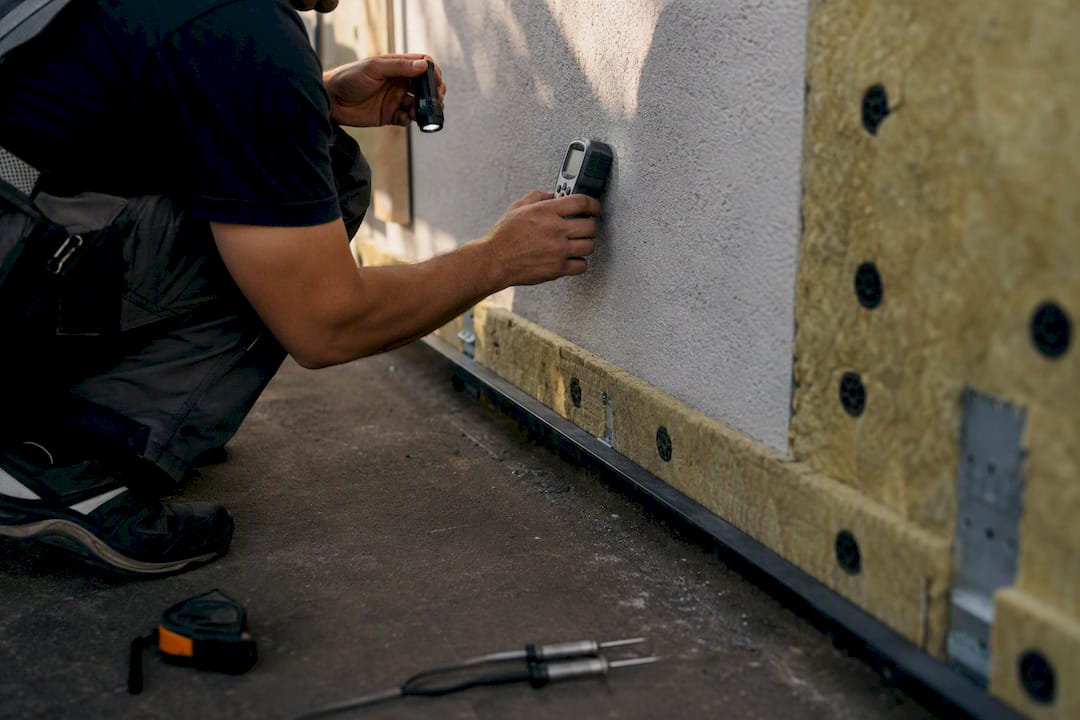
The recurring mistake isn’t the fixing choice, it’s skipping the substrate survey because the schedule’s tight. Drill first, discover cavity insulation or a rendered lightweight block second, and you’ve created a callback. A3m’s process builds substrate checks into the manufacturing brief before a single bracket gets cut, which is the cheapest insurance on a large rollout.
Get your signage specified and installed properly
There are plenty of ways to source signage fixings, from local fabricators to national installer networks, but few combine specification advice with in-house manufacture and managed installation under one roof. A3m does. Our production teams build every sign with the correct fixing method engineered in from the start, and our installers carry the CSCS, PASMA and IPAF competency the standards call for.
Whether you’re rolling out fascia signage across twenty sites or specifying a single illuminated panel, A3m can survey the substrate, recommend the right fixing family, and manufacture to fit before installation day arrives. Get in touch to request a site survey or a quote through our signage services page, and we’ll talk you through pull testing options for anything projecting or high-load.
Sources
- KH-MECHANICAL-FIXING.pdf
- Safety Sign Fixing Methods: Screws, Adhesive, Magnets and Cable Ties | SafetySignHub
- Fastener Guide for Sign Makers | 8 Shop Signs