

For UK workplaces and public spaces, specify floor graphics with a wet-condition pendulum test value (PTV) of 36+, and never rely on an R-rating alone. Insist on an in-situ pendulum test certificate before sign-off, plus a written maintenance plan. That single requirement does more to protect people, and you, than any other line in a spec.
TL;DR:
- Ensure floor graphics in wet areas have a pendulum test value of 36+ and obtain an in-situ pendulum test certificate before sign-off.
- R-ratings are unreliable for wet slip risk; rely on Pendulum Test Value results, especially for installed graphics.
- Reputable labs report the lowest in-situ PTV after bonding, as wear and cleaning often reduce slip resistance over time.
- Certified pendulum testing, using calibrated rubber sliders and water contamination, is the preferred method for UK compliance.
- Regular re-testing and proper installation, cleaning, and maintenance are essential to maintain slip safety standards.
Table of Contents
- What UK floor graphics slip ratings actually mean
- Standards and test methods worth knowing
- Where floor graphics belong, and where they don’t
- What to ask manufacturers before you specify
- Installation and maintenance that protect your slip rating
- Legal duties and how testing supports compliance
- A3m’s perspective on specifying safe floor graphics
- The industry’s blind spot on floor graphics
- Why A3m is the practical choice for compliant floor graphics
- Sources
What UK floor graphics slip ratings actually mean
Two systems dominate UK slip-resistance conversations, and they measure quite different things. The DIN ramp test rates surface from R9 to R13, with R9 covering the lowest resistance and R13 the highest, typically for oily industrial floors. It’s a useful shorthand from manufacturers, but the HSE’s technical guidance flags a real problem: a single R-rating band can span a wide range of actual friction values, so products with the same R rating may behave differently underfoot when wet.
The pendulum test measures something more specific: how a rubber slider, weighted and swung to mimic a heel strike, grips a wet surface. The result is the Pendulum Test Value, and the HSE interprets it plainly: 0 to 24 means high slip potential, 25 to 35 is moderate, and above a certain threshold is classed as low. That’s why UK specifiers lean on PTV rather than R-ratings for wet-slip risk.
Why does the pendulum win out for British conditions? It replicates the hydraulic uplift a heel creates on a wet floor, which the UK Slip Resistance Group notes is far closer to how real slips happen than a static ramp angle.
For floor graphics specifically:
- R-ratings tell you almost nothing about wet-slip behaviour once a film is applied
- PTV testing on the actual installed graphic, not just the base laminate, is what regulators and insurers respect
- A graphic can carry a good R-rating on paper and still test poorly once fitted with print and lamination layers
Standards and test methods worth knowing
British specifiers need to recognise a handful of named methods when reading a lab report. Get familiar with these before you approve any floor graphic:
- BS 7976 / BS EN 16165: the pendulum test standard, operated with a calibrated rubber slider swung across the wet or dry surface. It’s the method HSE prefers for UK risk assessment.
- DIN 51130: the German ramp method behind R9 to R13 ratings, useful for comparing broad product categories but weak on wet-slip precision.
- Rz microroughness: a measure of surface texture depth in microns. The HSE’s GEIS2 guidance treats readings below 10 microns as high slip potential in wet pedestrian areas, 10 to 20 microns as moderate, and above 20 microns as low, using it alongside pendulum results rather than instead of them.
One point catches specifiers out repeatedly: ex-factory PTV figures rarely match what you get once a graphic is bonded to a real floor, grouted around, or scrubbed a few dozen times. Reputable labs report the lowest in-situ PTV recorded, not the best one, precisely because that’s the figure that matters when someone’s shoe meets the floor on a wet Tuesday.
Where floor graphics belong, and where they don’t
Floor graphics earn their place in plenty of commercial settings, but the wrong location turns a marketing asset into a liability.
Environments that work well:
- Dry retail aisles and till points, where footfall is high but contamination is rare
- Exhibition halls and event floors, provided spills are managed quickly
- Office reception areas and corridors with controlled foot traffic and no external weather ingress
- Warehouse and route-marking applications away from vehicle turning zones or oil spill risk
Environments to avoid or approach with serious caution include permanently wet areas, ramps and sloped walkways, commercial kitchens, and exposed entrance zones where rain gets tracked in on shoes. Constant contamination, rolling loads from trolleys or pallet trucks, and mixed footwear all erode the margin a graphic’s slip resistance was tested against.
As a baseline, treat 36+ PTV in both wet and dry states as the minimum for general low slip potential, and push higher for transport hubs, station concourses, or anywhere with heavy footwear and constant footfall.
Pro Tip: If an entrance zone genuinely needs branding, consider a combination of matting and signage rather than a floor graphic. A well-placed site safety board can carry the message without sitting directly in the wet-shoe path.
What to ask manufacturers before you specify
Procurement teams often accept a supplier’s headline rating without asking for the paperwork behind it. Don’t. Demand the following as standard:
- The in-situ PTV, not just a laboratory or ex-factory figure
- The slider type used (four-S rubber is the UKSRG-recommended standard)
- The contamination medium used during testing (water is standard for most commercial floors)
- The test date and the testing body’s accreditation
- Expected PTV degradation over a defined wear cycle
Two broad material categories dominate the market: textured one-part self-adhesive films, and two-part systems combining a printed film with a separate anti-slip laminate. The two-part route generally holds slip performance for longer under heavy foot traffic, though it costs more upfront and needs more careful installation.
Industry guidance recommends annual in-situ pendulum testing in high-traffic zones, because foot traffic and cleaning chemicals both degrade PTV over time, sometimes dropping a floor from an acceptable rating to a risky one within a year or two.
Build your tender documents around these checklist items: required PTV threshold, slider and contamination method, warranty period against slip degradation, and a written re-test schedule. A supplier who can’t answer these without hesitation isn’t ready for a commercial contract. A3m’s product range is specified with exactly this evidence trail in mind.
Installation and maintenance that protect your slip rating
A graphic that tested well on the bench can still fail on site if installation or upkeep is sloppy. Get the fundamentals right from day one:
- Prepare the substrate properly: dust, grease, and old adhesive residue all compromise bond strength and let moisture creep under the edges.
- Seal every edge: peeling corners aren’t just untidy, they’re a trip hazard and a route for contamination to sit beneath the film.
- Set a cleaning regime: use only cleaning agents the manufacturer approves; harsh degreasers and steam cleaning can strip texture faster than normal wear.
- Respond to spills immediately: matting near entrances and quick-response spill protocols matter more for floor graphics than for bare flooring, since the printed surface can mask early wear.
- Re-test annually in high-traffic zones, and immediately after any slip incident, following the post-incident testing practice that professional testers recommend.
Pro Tip: Photograph the installation on day one and again at each maintenance check. A simple before/after record, alongside your test certificates and cleaning logs, is often the single most persuasive piece of evidence in a liability discussion.
Legal duties and how testing supports compliance
Regulation 12 of the Workplace (Health, Safety and Welfare) Regulations 1992 requires floors to be suitable, in good condition, and free from hazards that could cause a slip. It doesn’t set a numeric slip rating. There’s no legal figure written into statute.
That gap is exactly why HSE and UKSRG guidance functions as the de facto industry benchmark. Courts and insurers look for evidence that a dutyholder acted reasonably, and a PTV of 36+ backed by a dated test certificate is far stronger evidence than a manufacturer’s marketing claim.
- Keep every pendulum test certificate on file, dated and signed
- Log cleaning schedules and spill responses as they happen, not retrospectively
- Bring in an accredited tester for any change of use, high footfall increase, or after an incident
- Talk to your insurer early if you’re specifying graphics for a public-facing or transport-adjacent space
A3m’s perspective on specifying safe floor graphics
A3m manufactures large-format print in-house, which means slip testing evidence gets built into a project from the design stage, not bolted on afterwards. We ask every material supplier for the same paperwork we’d expect a client to ask us: in-situ PTV, slider type, contamination medium, and test date.
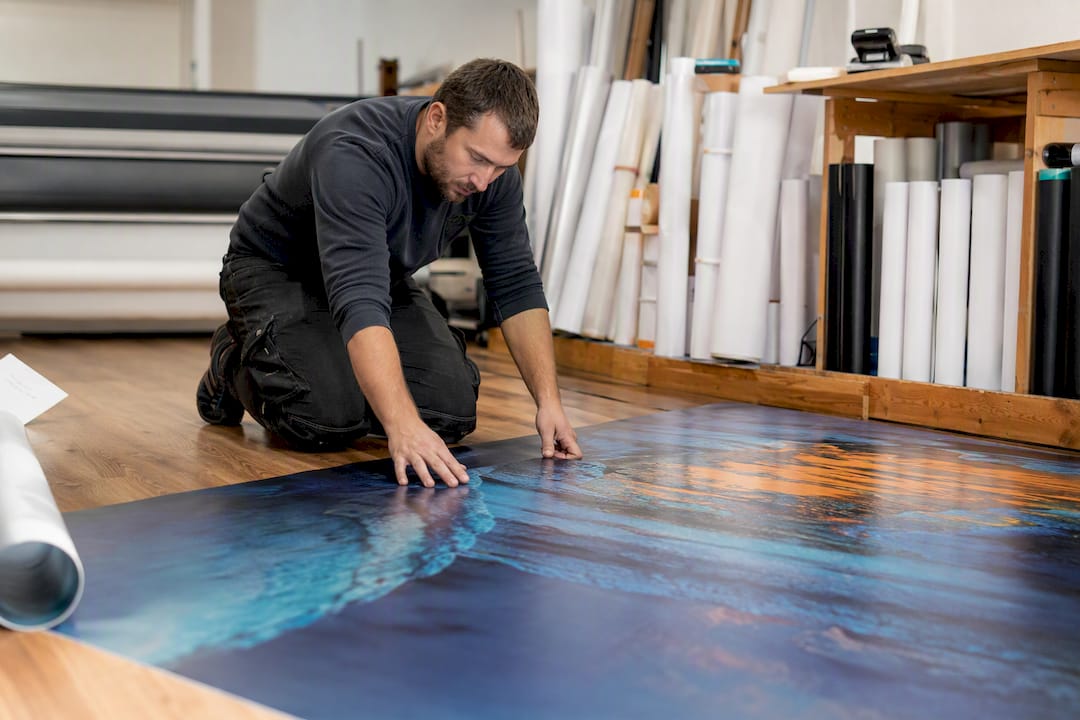
At handover, clients receive a short pack: the test certificate for the specific product used, manufacturer cleaning guidance in plain language, and a suggested inspection schedule tailored to footfall. That’s not a sales gimmick, it’s what keeps a floor graphic doing its job six months after installation, not just on the day it’s laid.
The industry’s blind spot on floor graphics
Most guidance on slip resistance treats floor graphics as an afterthought bolted onto general flooring advice, and that’s a mistake. A plain vinyl floor and a printed, laminated graphic on top of it are not the same surface, even when the base substrate is identical. The print layer, the lamination, the adhesive bond at the edges: each one changes the friction profile, and none of that shows up if you only ask for the base material’s R-rating.
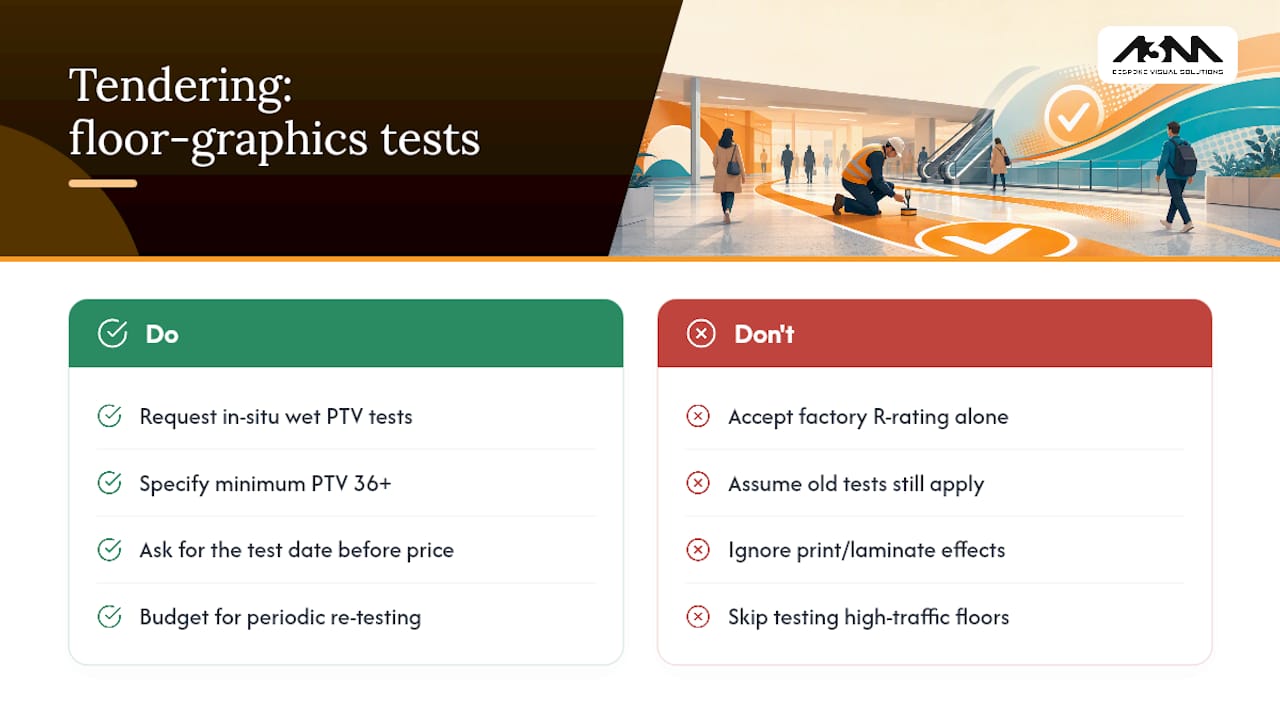
The uncomfortable truth is that plenty of floor graphics get specified on a manufacturer’s headline number alone, with nobody checking whether that number reflects the installed product, in situ, under wet conditions. HSE’s own guidance is explicit that ex-factory figures can diverge sharply from real-world performance once a floor has been grouted, polished, or simply walked on for a few months. Treat that divergence as the rule, not the exception, and budget for re-testing rather than assuming day-one performance holds forever.
If there’s one habit worth building into every tender, it’s this: ask for the test date before you ask for the price. A PTV of 36+ from three years ago on a heavily trafficked floor tells you almost nothing useful.
— Steve
Why A3m is the practical choice for compliant floor graphics
A3m gives UK facilities and procurement teams something most print suppliers don’t: in-house manufacturing that keeps slip-testing evidence attached to the product from design through to installation, rather than chasing a third-party supplier for paperwork after the fact.

Where a generic print vendor might hand over a graphic with a manufacturer’s generic R-rating and little else, A3m builds the evidence trail into the order itself: in-situ PTV data, slider and contamination details, and a maintenance schedule suited to your footfall. That matters whether you’re branding a retail rollout, an exhibition floor, or a hotel lobby, because the wrong laminate in the wrong location becomes a liability long before it becomes a design problem.
If you’re specifying floor graphics for a UK site and want the testing evidence sorted before installation day, get in touch about A3m’s large-format print manufacturing capabilities and ask for a quote against your specific floor plan and footfall pattern.
Sources
Keep these documents alongside your procurement and handover paperwork: the HSE’s flooring guidance, the GEIS2 technical note on pendulum operation and Rz roughness, UKSRG’s pendulum introduction, and the Workplace Regulations text itself. File test certificates and cleaning logs with every contract, and if you manage a venue rather than a single site, the Jigsaw Conferences guide to venue safety regulations is a useful companion piece for wider site duties.
- HSE: Assessing the slip resistance of flooring
- HSE technical guidance: assessing slipperiness of floors (GEIS2)
- The Workplace (Health, Safety and Welfare) Regulations 1992 — Regulation 12
- UK Slip Resistance Group: Introduction to the pendulum tester