

For commercial printed graphics in publicly accessible locations, a premium hard-coat polyester anti-graffiti laminate applied by a specialist installer is usually the best balance of durability, replaceability, and optical clarity. For glass shopfronts and transit glazing, a sacrificial polyester film at around 6 mil (~150 µm) with a hard outer coat is the standard specification. For rigid printed panels and exterior wall graphics where repeated solvent cleaning is expected, a permanent hard-coat overlaminate is the more cost-effective long-term choice.
Here is what to request from a supplier immediately:
- A full technical datasheet showing thickness in microns, hard-coat scratch rating, and chemical resistance test results
- Confirmation of EN 13501-1 fire classification if the installation is in a public building or transport environment
- A sample of the recommended film on your substrate before committing to a full roll or factory-laminated run
- Clarification on whether the product is a sacrificial or permanent system, and the supplier’s recommended replacement cycle
Key takeaways
Specifying the right anti-graffiti laminate comes down to three things: matching the system type to the substrate, requesting surface energy and chemical resistance data rather than relying on thickness alone, and securing an emergency replacement SLA before installation.
| Point | Details |
|---|---|
| Match system to substrate | Sacrificial film for glass and heritage surfaces; permanent hard-coat overlaminate for rigid panels and high-traffic infrastructure. |
| Request surface energy data | Ask suppliers for a surface energy figure below 22 mN/m; fluoropolymer and PTFE-modified systems typically meet this benchmark. |
| Factory lamination saves cost | For volume print campaigns, factory-applied overlaminates remove the installation variable and are usually more cost-effective than site-applied film. |
| Build in an emergency SLA | Agree a 48–72 hour replacement window in the contract before installation, not after the first graffiti incident. |
| A3m end-to-end service | A3m covers survey, specification, factory lamination, on-site fitting, and maintenance support under a single point of accountability. |
Table of Contents
- What types of anti-graffiti laminate are available?
- Which datasheet attributes should you compare?
- How do you choose the right protective laminate for your site?
- What does good installation actually involve?
- How do you remove graffiti and maintain laminated surfaces?
- What technical evidence should you request from suppliers?
- How A3m specifies and supplies anti-graffiti laminates end to end
- What the industry gets wrong about anti-graffiti specification
- A3m’s anti-graffiti laminate and print protection services
- Sources
What types of anti-graffiti laminate are available?
The industry groups anti-graffiti protection systems into three categories: sacrificial, semipermanent, and permanent. Understanding the distinction is the single most useful thing you can do before writing a specification.
Sacrificial systems are designed to be removed along with the graffiti. The film or coating takes the damage, and you peel or strip it away and reapply. They suit glass, heritage masonry, and any substrate where you cannot use aggressive solvents. Permanent systems resist multiple cleaning cycles without re-application, making them the preferred choice for high-traffic infrastructure such as transit vehicles, hoardings, and exterior rigid panels. Semipermanent systems sit between the two: they withstand several cleaning cycles before requiring re-coating.
In film laminate form, the main product types are:
- Pressure-sensitive polyester (PET) sacrificial film: the most widely specified graffiti resistant film for glass; typically 100–175 µm, with a hard outer coat to resist abrasion and acid etching
- Hard-coat polyester overlaminates (permanent): applied over printed vinyl or rigid substrates; provide a cleanable wall coating that withstands solvent wipes without delaminating
- Polypropylene overlaminates: lower cost, suitable for short-term or interior applications; less chemical resistance than PET
- Dry-wipe films: a sub-category of hard-coat laminates optimised for marker pen removal; popular in education, hospitality, and transport environments
- Liquid anti-graffiti coatings: brushed or sprayed onto masonry, metal, or glass; permanent fluoropolymer and 2K aliphatic polyurethane formulations are preferred for high-traffic infrastructure, while sacrificial wax-based systems suit porous heritage stone
| Type | Pros | Cons | Typical substrates |
|---|---|---|---|
| PET sacrificial film | Protects against acid etching; peel-and-replace | Needs periodic replacement | Glass, polycarbonate |
| Hard-coat PET overlaminate | Multiple solvent cleans; excellent optical clarity | Higher unit cost | Printed vinyl, rigid panels |
| Polypropylene overlaminate | Low cost; wide roll availability | Limited chemical resistance | Interior graphics, POS |
| Dry-wipe film | Marker-pen resistant; easy wipe-clean | Not suited to heavy aerosol attack | Wayfinding, hospitality |
| Liquid permanent coating | No film seams; covers complex profiles | Requires professional application | Masonry, metal, glass |
Finishes and thickness: gloss films maximise colour vibrancy on printed graphics; satin and matt reduce glare on wayfinding and retail signage. Thicker films (150 µm and above) offer better puncture resistance and are worth specifying for ground-floor or street-level installations. Thinner grades (80–100 µm) suit interior or elevated positions where abrasion risk is lower.
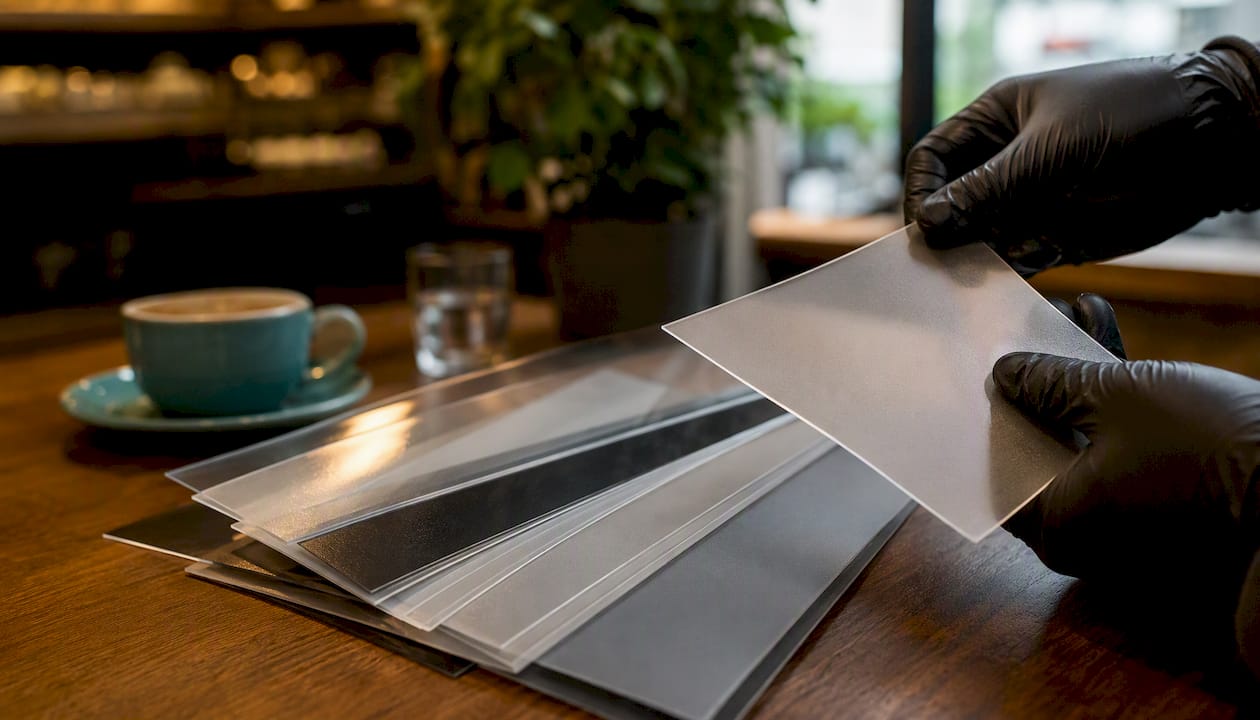
Supply formats: roll stock is available in widths from 1,270 mm to 1,600 mm, in 5 m sample rolls through to 50 m production rolls. For high-volume campaigns, factory-laminated print from a large format print supplier removes the application variable entirely and is often the most cost-effective route.
Which datasheet attributes should you compare?
A datasheet is only useful if you know which fields actually predict real-world performance. These are the core specifications to read on every product:
- Thickness (µm): total film caliper including adhesive; thicker generally means better puncture and abrasion resistance
- Hard-coat scratch rating: pencil hardness (H scale) or Taber abrasion cycles; look for 3H or above for exterior use
- Optical transmission: relevant for glass applications; premium films maintain clarity above 85%
- UV stability / yellowing resistance: ask for accelerated weathering data (hours to ASTM G154 or equivalent); yellowing destroys print appearance within 12–18 months on cheaper films
- Adhesive type: permanent adhesive for long-term installs; removable adhesive for sacrificial glass film
- Peel strength: measured in N/25 mm; too low and edges lift; too high and removal damages the substrate
- Service temperature range: critical for vehicle wraps and exterior panels subject to direct sun
- Chemical resistance test results: the specific solvents tested (acetone, IPA, MEK, xylene) and the pass criteria; request the test protocol, not just a pass/fail statement
- VOC content: relevant for enclosed spaces and BREEAM-rated buildings
Industry formulation guidance identifies a critical surface energy target below approximately 22 mN/m as the benchmark for reliable anti-graffiti performance against aerosol spray paints. Fluoropolymer and PTFE-modified systems typically meet this target. If a supplier cannot provide a surface energy figure, treat that as a gap in their technical evidence.
Pro Tip: The single datasheet field that correlates best with real-world graffiti resistance is the combination of hard-coat scratch rating and chemical resistance test results, not thickness alone. A thin film with a 4H hard coat and documented solvent resistance will outperform a thick film with no surface energy data.
How do you choose the right protective laminate for your site?
Work through this checklist before requesting a quote:
- Identify the substrate: glass, printed vinyl, rigid aluminium composite, polycarbonate, or masonry. Each has a different adhesion profile and cleaning tolerance.
- Assess accessibility and vandalism severity: ground-floor street-level installations face the highest risk from aerosol paint and acid etching; upper-floor or enclosed sites may need only a basic cleanable overlaminate.
- Define the expected cleaning method: solvent wipe, pressure wash, or peel-and-replace. Permanent hard-coat films suit solvent cleaning; sacrificial films suit peel-and-replace on glass.
- Set the optical requirement: gloss for maximum print vibrancy; matt or satin where glare is a concern or where the surface doubles as a dry-wipe board.
- Agree the budget and lifecycle plan: a sacrificial film on a shopfront glass costs a fraction of glass replacement and typically lasts 3–5 years before scheduled replacement; a permanent overlaminate on a rigid panel may last the full campaign life with no replacement.
- Decide the procurement route: roll stock for in-house application, factory print-and-laminate for volume campaigns, or specialist installer for glass and exterior rigid panels.
Three quick scenario resolutions:
- Ground-floor retail glass: specify a premium hard-coat sacrificial polyester film applied internally where access allows; internal application typically lasts longer and costs less to replace than external.
- Exterior rigid poster panels: a permanent hard-coat PET overlaminate factory-applied to the print before installation; request UV stability data and a minimum 3H scratch rating.
- Transit vehicle windows: sacrificial film rated for curved glass application, with an emergency replacement SLA from the installer; protecting glazing from acid etching avoids the far higher cost of full glass replacement.
For outdoor signage projects where the graphic itself is the primary asset, factory lamination before despatch removes the installation risk and gives you a single point of accountability.
What does good installation actually involve?
Poor application is the most common reason a protective laminate for walls or glass underperforms. Here is the workflow a competent installer should follow:
- Site survey: confirm substrate condition, access constraints, and ambient temperature and humidity (most films require 15–25°C and below 70% relative humidity for installation).
- Substrate cleaning: degrease with IPA; remove any existing adhesive residue; allow full dry time before application.
- Film application: use a squeegee technique to eliminate air bubbles; on large glass panels, a wet application method reduces the risk of trapped air.
- Edge sealing: seal all cut edges with a compatible edge sealant or heat-weld tape to prevent moisture ingress and edge lifting, particularly on exterior installations.
- Post-installation inspection: check for bubbles, edge lifts, and optical distortion before signing off; document the installation date and film batch for warranty purposes.
Questions to ask any installer before you appoint them:
- What warranty do you offer on workmanship, and is it separate from the film manufacturer’s product warranty?
- What is your emergency replacement window if the film is damaged by vandalism within 48 hours of installation?
- Are you insured for damage to the substrate during removal or installation?
- What is your recommended preventive replacement cycle for this specific product and location?
Curved glass is a specialist application. Most standard PET films are rated for flat or slightly curved surfaces only; deep curves require a cast film or a purpose-made sacrificial product. Always confirm the minimum bend radius in the datasheet against your glazing profile before ordering.
For vinyl wrap and graphic installations that will carry an overlaminate, the base graphic must be fully cured before lamination; applying a hard-coat film over uncured ink risks adhesion failure within weeks.
How do you remove graffiti and maintain laminated surfaces?
The cleaning method depends entirely on whether the system is sacrificial or permanent.
Sacrificial film on glass:
- Soft wipe with a mild solvent (IPA or a proprietary graffiti remover) for surface marks that have not penetrated the hard coat
- For deep etching or paint that has compromised the film, peel and replace the affected section; no specialist chemicals required
- Schedule a full film inspection every 12 months; replace proactively at the end of the manufacturer’s stated service life rather than waiting for visible failure
Permanent hard-coat overlaminate on printed panels:
- Wipe with IPA or a manufacturer-approved graffiti remover; test in an inconspicuous area first
- Avoid abrasive pads, strong alkaline cleaners, and chlorinated solvents unless the datasheet explicitly approves them
- Pressure washing is acceptable on some exterior permanent coatings; confirm the maximum bar rating with the manufacturer before use
- Reactive cleaning (clean as soon as graffiti appears) is more effective than scheduled-only cleaning because fresh aerosol paint has not fully cross-linked with the surface
Maintenance timeline for a typical exterior installation:
- Monthly: visual inspection; wipe any surface marks with IPA
- Quarterly: full clean with approved solvent; check edge seals and re-seal any lifted edges
- Annually: formal condition report; replace any sections showing yellowing, delamination, or hard-coat breakdown
- At end of stated service life: full replacement, regardless of visual condition
The hydrophobic and oleophobic surface created by a quality anti-graffiti coating or film prevents paint and ink penetrating the substrate, which is why prompt cleaning works so well on well-specified products.
What technical evidence should you request from suppliers?
Marketing claims are not a substitute for test data. Before placing an order, request the following from every supplier:
- Full technical datasheet with all fields populated (thickness, adhesive type, hard-coat rating, chemical resistance, UV stability, service temperature)
- Chemical resistance test protocol: the specific solvents, concentrations, contact times, and pass criteria used; a pass/fail statement without the protocol is unverifiable
- ISO or manufacturer test reports for abrasion resistance and clean-cycle endurance; ask how many solvent wipe cycles the permanent coating is rated for
- EN 13501-1 fire classification for any installation in a public building, transport hub, or hospitality venue; request the actual test certificate, not just a stated class
- UV ageing data: hours tested to ASTM G154 or equivalent, with before-and-after colour and gloss measurements
- UNI 11246:2007 compliance (or equivalent substrate-specific standard) where the supplier claims certification for aluminium or similar substrates
Surface energy benchmark: industry formulation guidance sets a critical surface energy target of below approximately 22 mN/m for reliable resistance to aerosol spray paint. Fluoropolymer and PTFE-modified systems typically achieve this. If a supplier cannot provide a surface energy figure, ask them to explain what alternative technical evidence supports their anti-graffiti claim.
Standards and regulated test methods exist for specific substrates; procurement teams should request the test protocols themselves, not just pass/fail summaries. A supplier who resists sharing test protocols is a supplier worth reconsidering.
How A3m specifies and supplies anti-graffiti laminates end to end
A3m’s process removes the guesswork from specification and gives facilities teams a single point of accountability from survey to handover.
The project timeline:
- Site survey: assess substrate, access, vandalism history, and optical requirements; confirm ambient conditions and any fire-rating obligations
- Specification decision: select laminate type, thickness, finish, and adhesive system based on the survey findings; present two or three options with datasheet evidence
- Sample installation: apply a test section on the actual substrate and leave it for an agreed period before full commitment
- Factory lamination or on-site fit: high-volume printed graphics are factory-laminated before despatch; glass and rigid panel installations are fitted on-site by experienced installers
- Handover and maintenance plan: provide a written maintenance schedule, approved cleaning product list, and emergency replacement contact
What to expect from a well-run project:
- A written specification document you can use in a tender or procurement brief
- Datasheet evidence for every product specified, including fire classification where required
- A workmanship warranty separate from the film manufacturer’s product warranty
- A defined emergency replacement window (typically 48–72 hours for high-footfall locations)
- A scheduled preventive replacement recommendation tied to the film’s stated service life
For signage projects that combine printed graphics with protective finishing, factory lamination at the print stage is almost always more cost-effective than site-applied film, and it eliminates the installation variable entirely.
Pro Tip: When reviewing a supplier’s warranty, check whether the workmanship warranty and the product warranty are issued by the same party. If they are not, clarify in writing who is liable if a delamination failure occurs and whether the cause is disputed between the film manufacturer and the installer.
What the industry gets wrong about anti-graffiti specification
The most persistent mistake we see at A3m is buyers specifying on thickness alone. A 200 µm film with no hard-coat data and no surface energy figure will underperform a 100 µm film with a documented 4H hard coat and a verified surface energy below 22 mN/m. Thickness is visible on a datasheet; surface energy and chemical resistance require a supplier who actually tests their products.
The second mistake is treating sacrificial and permanent systems as interchangeable. They are not. Specifying a permanent hard-coat overlaminate on heritage masonry, for example, can trap moisture and cause substrate damage that costs far more to remediate than the graffiti ever would. The DOT research on anti-graffiti coatings is clear that permanent coatings suit durable, non-porous infrastructure, while sacrificial systems are the right call for porous and heritage substrates.
The third mistake is skipping the emergency replacement SLA. A shopfront left with visible graffiti for more than 24 hours does real damage to brand perception. Consistent, clean brand presentation directly affects customer trust and footfall. Build the replacement window into the contract before the installation, not after the first incident.
A3m’s anti-graffiti laminate and print protection services
A3m offers something most film suppliers cannot: a complete service from print production through factory lamination to on-site installation and ongoing maintenance support. You get one supplier, one warranty conversation, and one call when something needs replacing.

For facilities managers protecting printed graphics across multiple sites, A3m’s large format print and lamination service combines factory-applied hard-coat overlaminates with a managed replacement programme. For retail and hospitality clients protecting shopfront glazing, we survey, specify, fit, and maintain sacrificial film installations with a defined emergency response window. We also supply roll stock with full technical datasheets for clients who prefer in-house application.
To get started, contact A3m for a site survey, a sample roll request, or a full procurement pack including datasheet evidence and a written specification. Visit our signage service page to see the full range of protective finishing options or get in touch directly to discuss your project.
Sources
Before finalising any specification, consult these resources directly:
- Anti‑Graffiti Coatings: Technology & Formulation
- Anti‑graffiti paints: what are they and how do they work? – IPCM
- EXECUTIVE SUMMARY (DOT research chapter on anti‑graffiti coatings)
- Anti‑Graffiti Film: How Sacrificial Layers Save Thousands
- The Ultimate Guide to Glass Graffiti Protection
When reviewing any datasheet, confirm it includes chemical resistance test protocols (not just pass/fail), UV ageing hours, and EN 13501-1 fire classification where your installation requires it. A datasheet that omits any of these fields is incomplete for commercial procurement purposes.